The best mini steppers pair a compact footprint with the kind of movement and support that suit your home workout routine. Compare basic twisting steps, folding vertical climbers, and a seated cross trainer, then check resistance, stability, and storage needs before choosing.
Quick Top Products
Niceday Twist Stepper
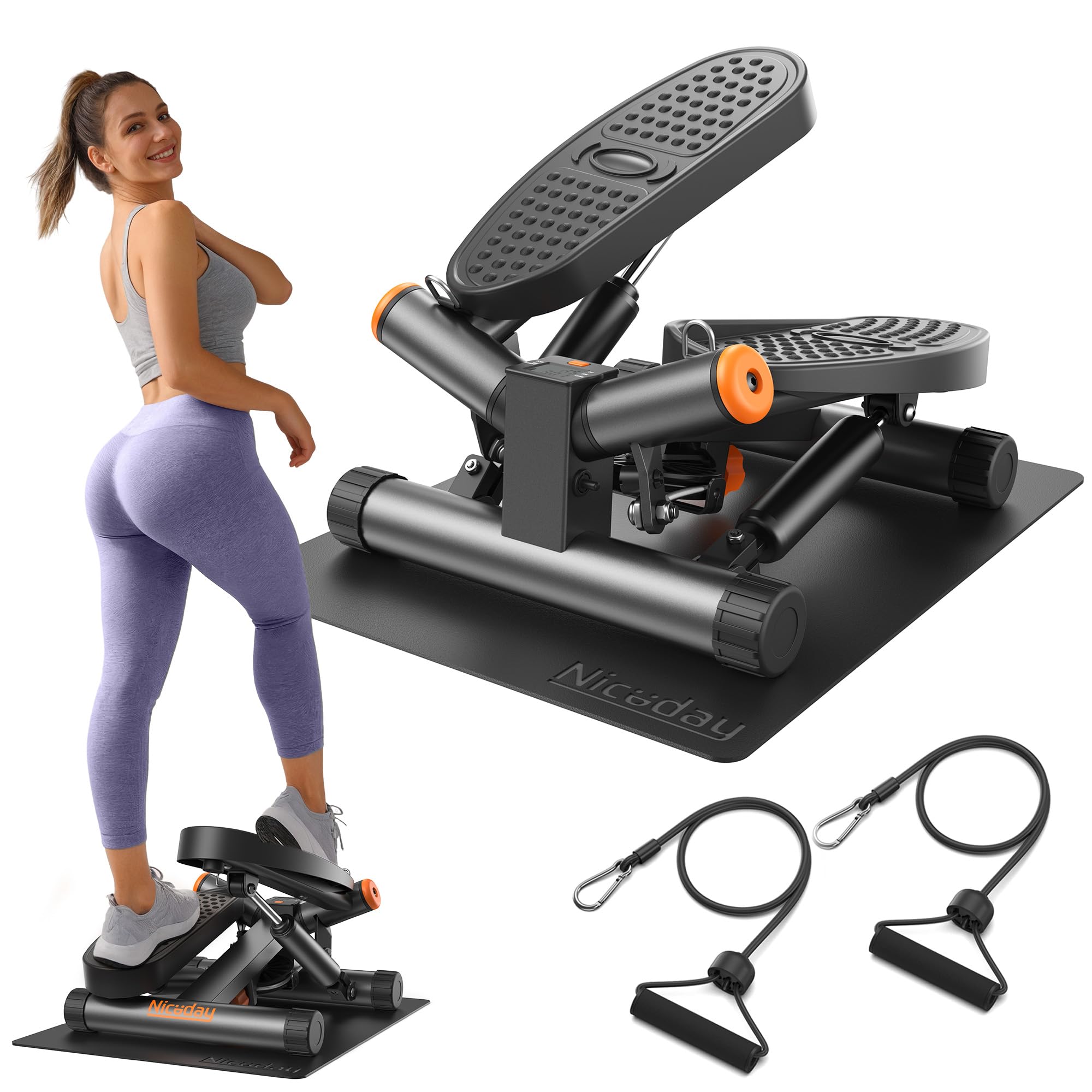
- Twisting motion adds a side-to-side component to basic steps.
- Two resistance bands add arm exercises.
- Compact size and light weight suit moving or storing between sessions.
Best For: Home exercisers who want a compact twisting stepper with arm bands.

Merach 3D Rocking Stepper
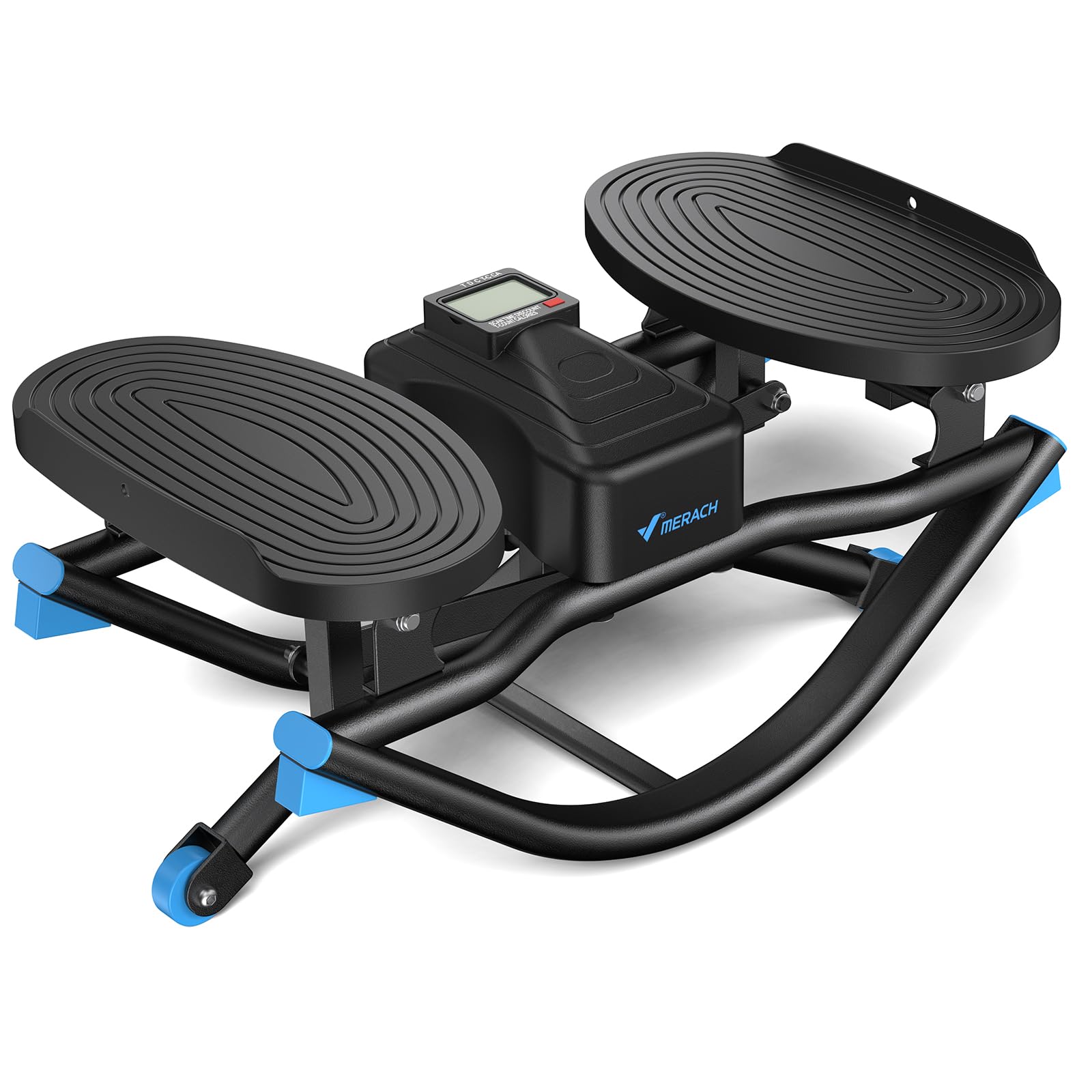
- Rocking motion shifts movement laterally.
- The board is designed to challenge balance and coordination.
- It weighs 12 pounds and is ready to use out of the box.
Best For: People who want a compact stepper with side-to-side motion and balance work.
SPORTSROYALS Twist Stepper
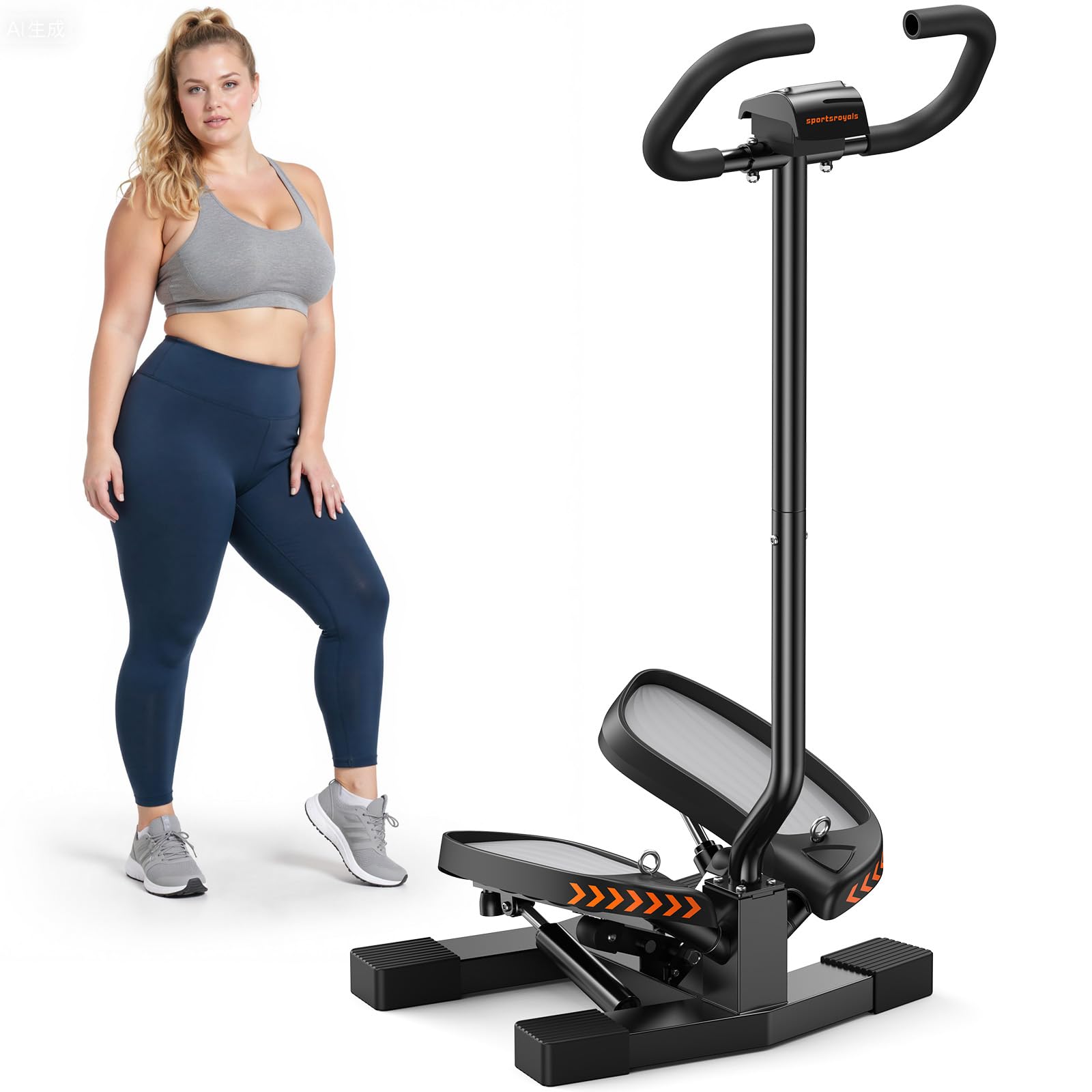
- A U-shaped handlebar provides different grip points for balance.
- Resistance bands add upper-body exercises.
- The machine arrives 90% pre-assembled.
Best For: Beginners seeking a mini stepper with a support handlebar and resistance bands.
Niceday Folding Stair Stepper
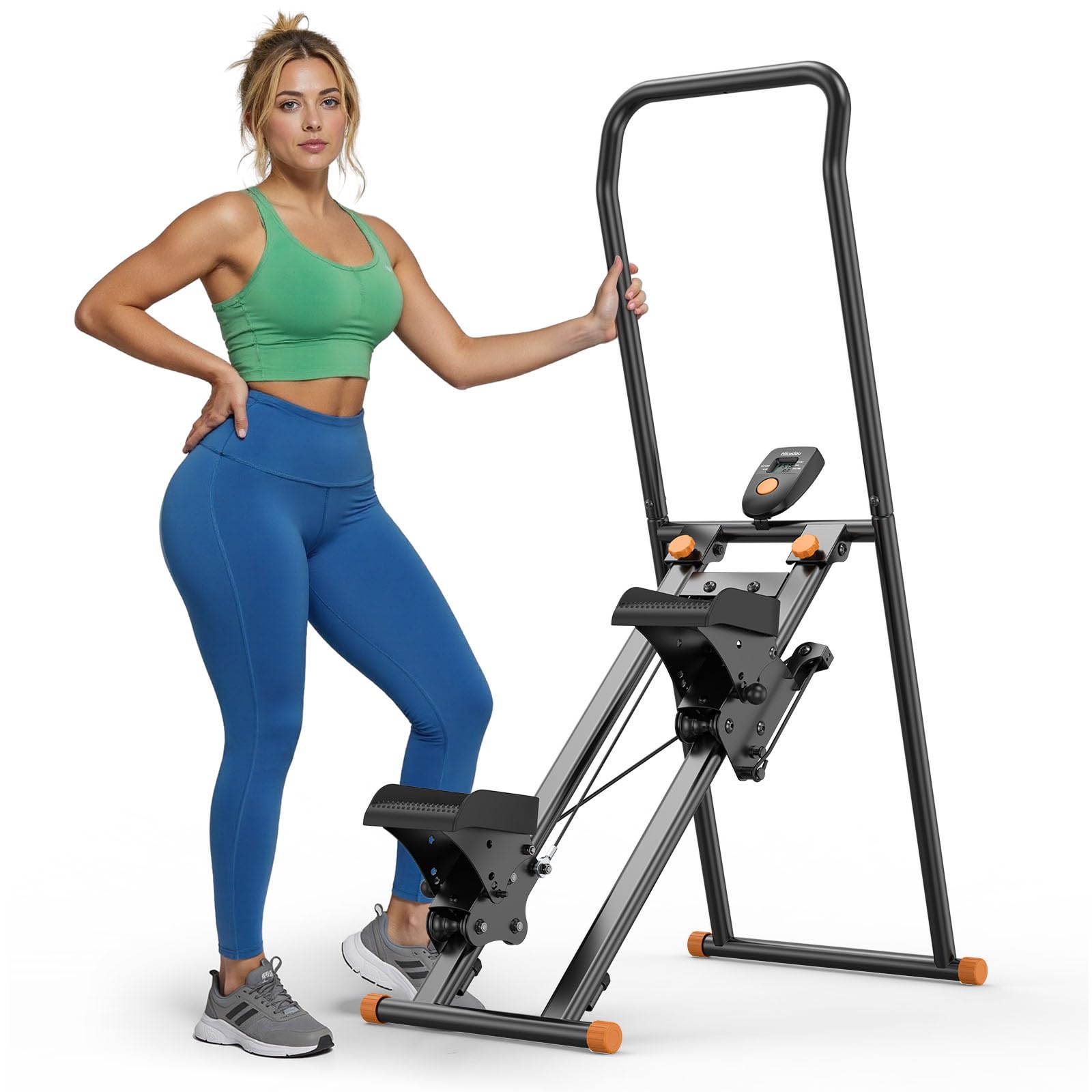
- Three pedal angles offer options for changing the movement.
- The LCD tracks steps, calories, time, and speed.
- It folds to 45 × 18 inches for storage.
Best For: Home exercisers who want a folding climber with adjustable pedal angles and a handle-free frame.
MERACH Foldable Stair Stepper
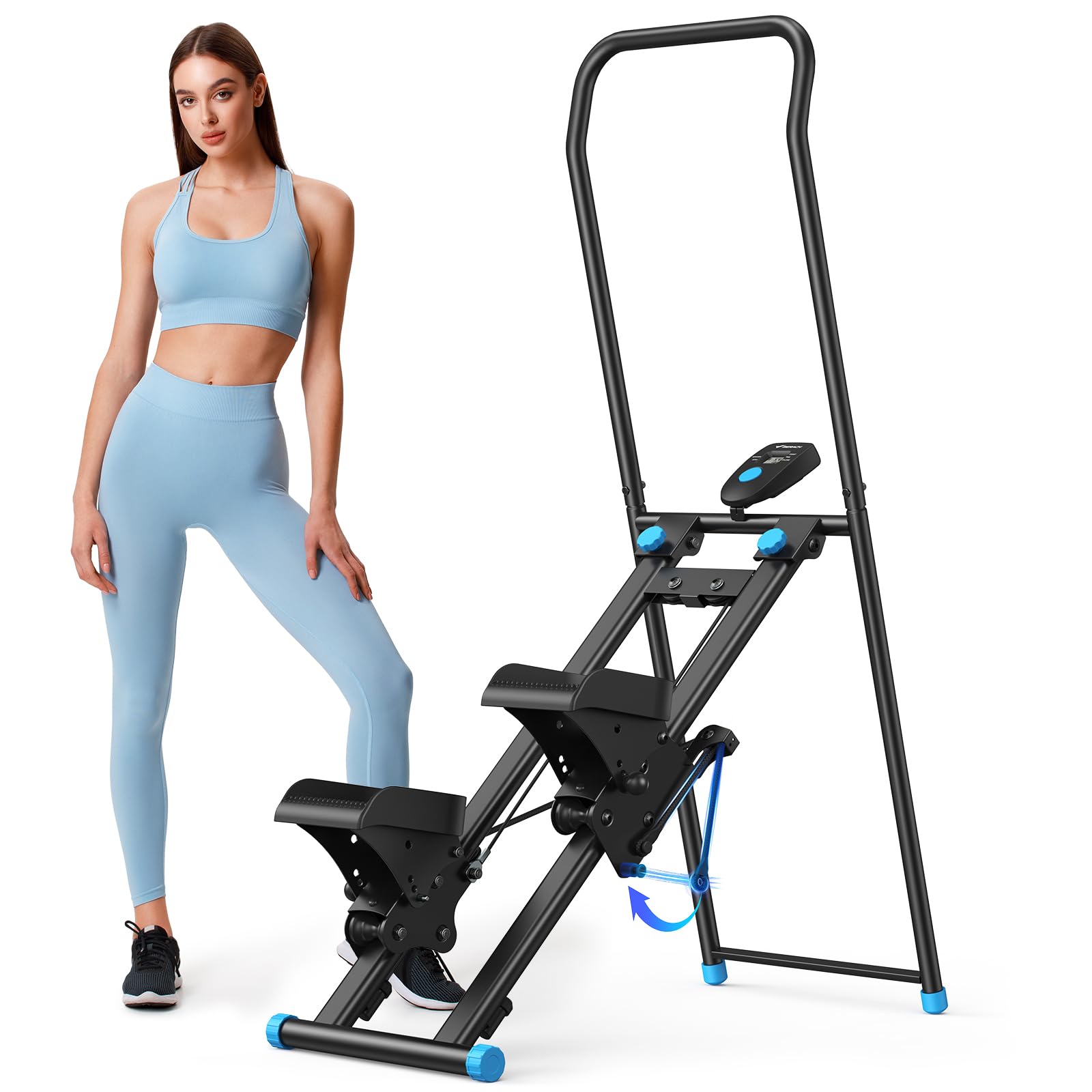
- Adjustable resistance and pedals allow workout customization.
- The LCD tracks time, steps, and calories.
- The frame supports up to 300 pounds.
Best For: Buyers wanting an adjustable-resistance climber that folds for small-space storage.
HXD-ERGO Vertical Climber
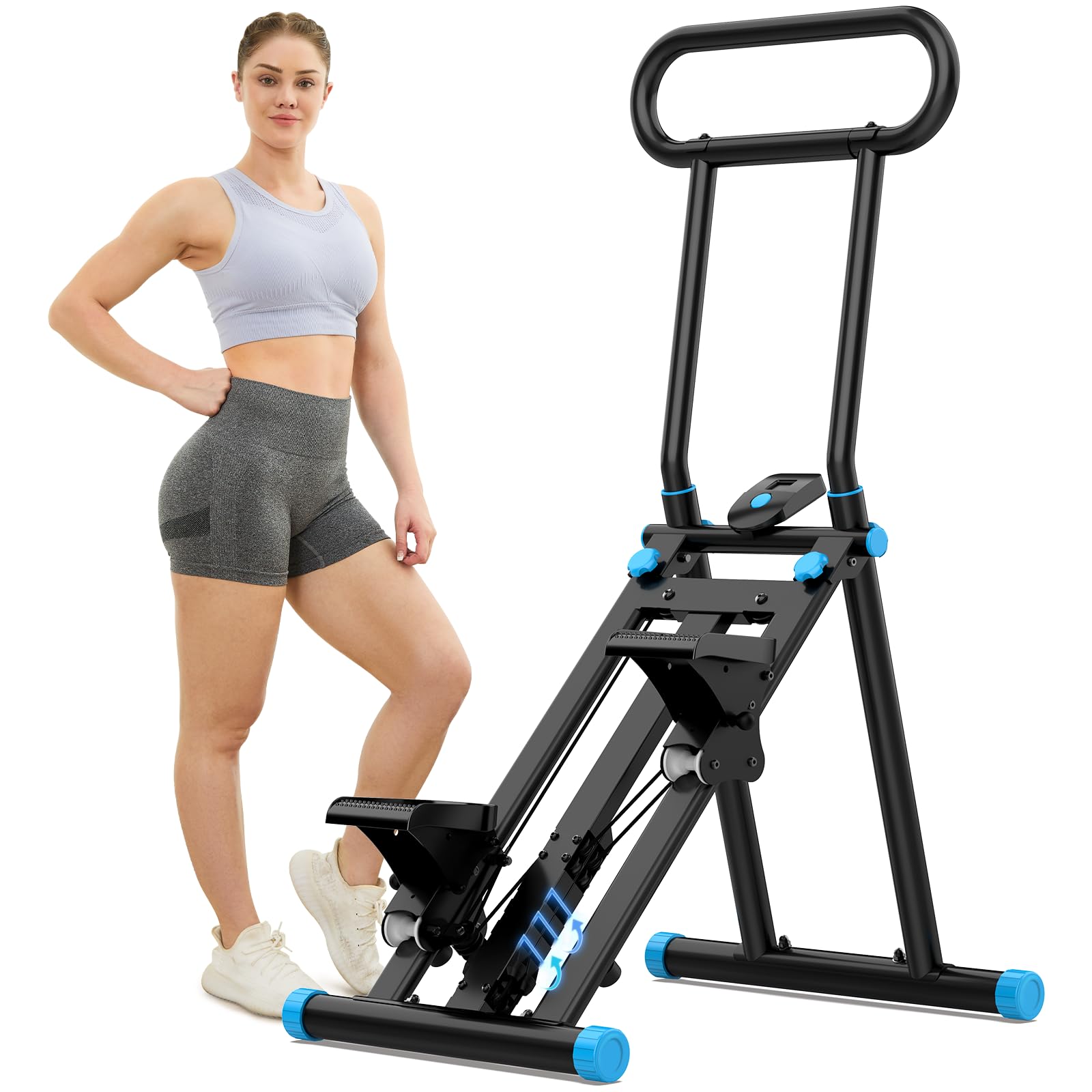
- Six resistance levels allow workout adjustment.
- The armrests adjust to three heights.
- Its reinforced triangular frame supports up to 300 pounds.
Best For: Users who want a foldable vertical climber with multiple resistance levels and an adjustable handlebar.
Teeter FreeStep Recumbent Cross Trainer
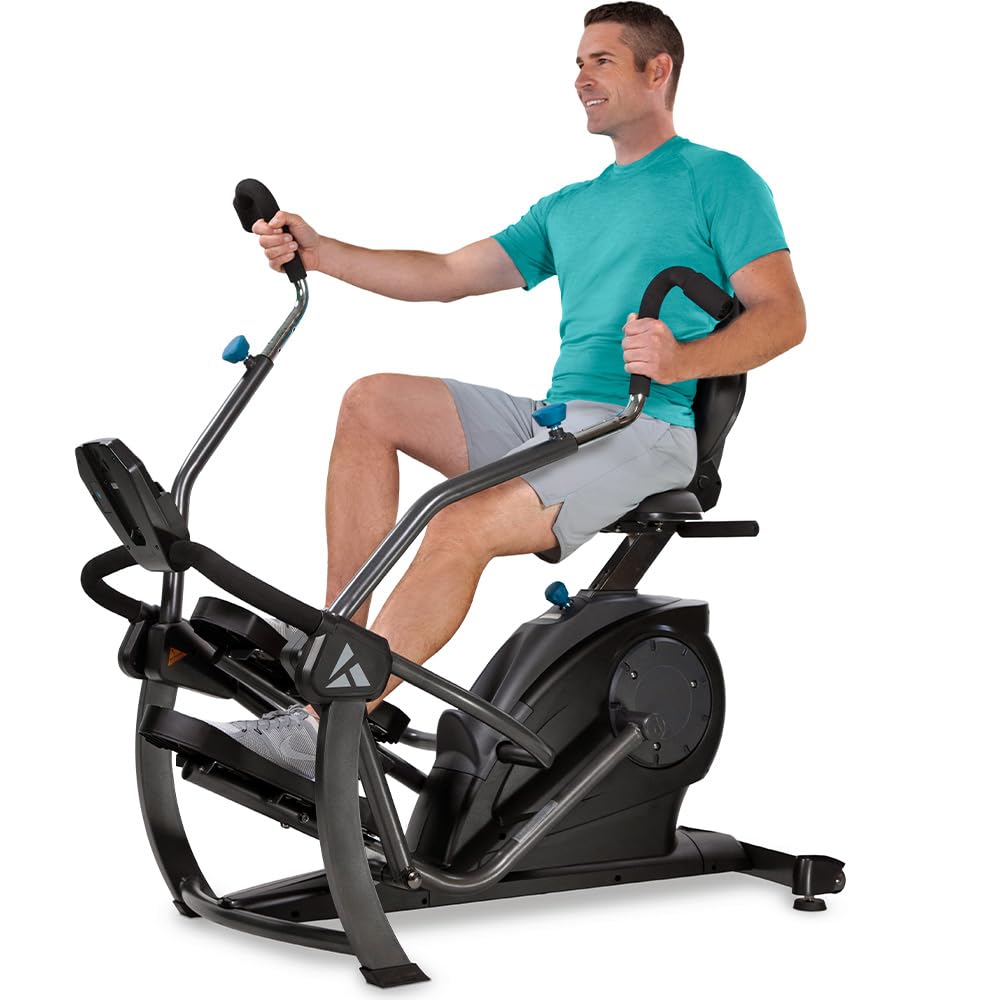
- The seated format pairs upper- and lower-body movement.
- Magnetic resistance has 13 levels.
- The seat reclines to three positions and adjusts in height.
Best For: People seeking a seated, joint-conscious total-body workout rather than a compact standing stepper.
Twist Steps With Bands
Niceday Steppers for Exercise, Stair Stepper with Resistance Bands, Mini Stepper with 300LBS Loading Capacity, Hydraulic Fitness Stepper with LCD Monitor
This Niceday mini stepper adds a left-and-right swing to the basic up-and-down stepping motion. Its two resistance bands give you a way to include arm work, while the LCD monitor tracks exercise data.
The product weighs 16 pounds and measures 16 × 12 × 14 inches, making it a compact choice to move between rooms. Oversized, nonslip pedals accommodate feet up to size 12.
The hydraulic system provides resistance, but the record does not explain whether or how users can adjust it. Choose this style if you want a small stepper with a twisting action; check the available workout range and setup details before buying.
Best For: Home exercisers who want a compact twisting stepper with arm bands.
| Pros | Cons |
|---|---|
|
|
Choose this model if a compact footprint, twisting action, and included bands matter more than a handlebar or a documented resistance adjustment. The 16-pound weight and 16 × 12 × 14-inch dimensions make storage and moving between rooms practical.
Before buying, check whether its fixed hydraulic resistance suits your preferred pace, since adjustment details are not provided. Its wider pedals may also suit buyers who want a stated foot-size fit.
Lateral Rocking Motion
Merach Rocking Steppers for Exercise at Home, 3D Motion Stair Stepper with Resistance Bands for Full Body Workout & Low-Impact Balance Board, 330 LBS Loading Capacity Exercise Equipment
Merach’s mini stepper uses a side-to-side rocking motion instead of the usual straight up-and-down action. The product notes say this motion engages hips, thighs, glutes, and core, while the balance-board design adds coordination and weight-distribution challenges.
It weighs 12 pounds and arrives ready to use out of the box, so it can move easily between rooms or a standing desk. The LCD tracks time, steps, and calories.
Its steel frame supports up to 330 pounds. Consider this option for compact, low-impact movement with a balance element; resistance bands are not mentioned for this model, and intensity adjustment is not specified.
Best For: People who want a compact stepper with side-to-side motion and balance work.
| Pros | Cons |
|---|---|
|
|
This model fits buyers who want a small machine with lateral motion and an explicit balance challenge. Its 12-pound weight and ready-to-use setup are useful when you plan to move it around the home.
The product notes identify the motion and tracked metrics but do not give dimensions or resistance settings, so check those details if storage space or progression options drive your choice. Its movement differs from conventional vertical mini steppers, making motion style the key tradeoff.
Handlebar Stability and Bands
SPORTSROYALS Stair Stepper,Twist/Mini Stepper for Exercise at Home,Step Machine with Resistance Bands for Full Body Workout, 350lbs+ Capacity
This SPORTSROYALS twist stepper adds a U-shaped handlebar to a compact stepping machine. The handlebar offers multiple grip points and is intended to help users keep balanced, while resistance bands extend the workout to the arms, chest, back, and shoulders.
Its LED monitor tracks time, count, calories, and distance. The pedals have silicone anti-skid pads, and the notes describe a 38° motion range.
The machine is 90% pre-assembled, with the remainder assembled in minutes. The record does not give a weight capacity figure that aligns clearly with the title’s “350lbs+” phrasing, so confirm the supported capacity before purchase if that detail matters.
Best For: Beginners seeking a mini stepper with a support handlebar and resistance bands.
| Pros | Cons |
|---|---|
|
|
Pick this model if balance support and bands matter more than the smallest possible footprint. Its handlebar has multiple grip points, and the LED monitor tracks several workout measures.
The notes mention a 38° motion range but do not state the machine’s dimensions or clearly resolve its user capacity. Confirm both if you need a specific storage fit or weight rating.
It is a different format from handle-free compact steppers and folding climbers.
Folds for Home Storage
Niceday Steppers for Exercise at Home, Stair Stepper with Handlebar, Stair Climber, Stair Master with 300LBS Loading Capacity
This Niceday stepper uses a sliding climbing motion and folds for storage. It has three pedal angles—-10°, 0°, and 10°—to vary the movement, plus an LCD monitor that tracks steps, calories, time, and speed.
The notes give product dimensions of 33.9 × 22.1 × 35.5 inches, an 18-inch maximum stride length, and a 300-pound capacity. Folding size is 45 × 18 inches.
Its handlebar presence is not mentioned, so do not assume this model offers upper-body support. It suits buyers who want a foldable climber with pedal-angle choices; check the listed measurements against your workout and storage space.
Best For: Home exercisers who want a folding climber with adjustable pedal angles and a handle-free frame.
| Pros | Cons |
|---|---|
|
|
Consider this option if folding storage and pedal-angle adjustments are priorities. The 45 × 18-inch folded dimensions and 18-inch maximum stride length give more concrete planning details than many compact steppers.
Its stated 300-pound capacity is also clear. The product record does not mention a handlebar or machine weight, so check those points before choosing if you need upper-body support or expect to move it often.
The larger climber format trades the grab-and-go size of a basic mini stepper for a defined stride and foldable frame.
Adjustable Foldable Climber
MERACH Stair Stepper for Home Gym Exercise, New Version Stairmaster for Full-Body Workout, Compact Folding Stair Climber with Extended Step Range, Adjustable Handlebar/Pedal
MERACH’s folding stair climber has adjustable resistance and pedals, allowing users to personalize workout intensity. The LCD monitor tracks time, steps, and calories burned.
Non-slip pedals and secure handlebars are part of the design, and the stated frame capacity is up to 300 pounds. It measures 33.9 × 22.1 × 47.2 inches and weighs 26.5 pounds.
The product is described as foldable and easy to store, but folded dimensions are not supplied. This is a larger format than a basic mini stepper, with handlebars and more setup features.
Consider it if you want a climber for a home gym and have room to check its storage arrangement.
Best For: Buyers wanting an adjustable-resistance climber that folds for small-space storage.
| Pros | Cons |
|---|---|
|
|
Choose this climber if you want adjustable resistance, pedals, and a handlebar-supported workout in a folding design. Its listed dimensions and 26.5-pound weight help with space and relocation planning, but no folded measurement is available.
Verify that it can be stored in your intended location, and check the stride feel if that is central to your routine. Compared with a simple mini stepper, it takes more space but offers more adjustments and a larger climbing format.
Six Resistance Levels
HXD-ERGO Stair Stepper for Home, New Version 6 Adjustable Resistance Vertical Climber Cardio Exercise Machine, Folding Stair Climber for Full Body Workout with Adjustable Handlebar
HXD-ERGO is a vertical climbing machine with six adjustable resistance levels and a handlebar that adjusts to three heights. Its triangular steel structure is rated to support up to 300 pounds.
The notes describe smooth, quiet motion and a low-impact design, though they do not provide the machine’s dimensions, weight, or folded size. That makes it harder to judge storage needs than some other folding climbers in this group.
Choose this option if resistance choice and handlebar fit are priorities, then confirm its footprint and folded measurements before buying for a compact room.
Best For: Users who want a foldable vertical climber with multiple resistance levels and an adjustable handlebar.
| Pros | Cons |
|---|---|
|
|
This is a fit for shoppers who want several resistance settings and an adjustable handlebar in a vertical climber. The three handle heights may help households with different users, while the capacity is clearly given as up to 300 pounds.
The record leaves out footprint, weight, folded size, and stride range, so confirm those before committing space or comparing its movement with another climber. Its main tradeoff is useful adjustment detail alongside limited storage and stride information.
Seated Low-Impact Training
Teeter FreeStep Recumbent Cross Trainer Stepper, Zero-Impact Exercise Bike Alternative w/Patented Physical Therapy Stride, Up to 350lb, Free App w/Trainer Workouts
The Teeter FreeStep is a recumbent cross trainer, so it provides seated stepping rather than the standing format of a typical mini stepper. It pairs upper- and lower-body movement and offers 13 levels of magnetic resistance.
The seat reclines to three positions, with variable seat height and four grip positions. A digital console tracks time, distance, speed, and calories, while a device holder supports media or workout viewing.
Its footprint is 54 × 38 inches, and the product is rated for users from 4 feet 11 inches to 6 feet 6 inches and up to 300 pounds in the notes. This is a substantial alternative for buyers prioritizing seated exercise, not compact storage.
Best For: People seeking a seated, joint-conscious total-body workout rather than a compact standing stepper.
| Pros | Cons |
|---|---|
|
|
Choose the FreeStep if seated exercise and upper- and lower-body movement matter more than getting a small standing stepper. Its resistance levels, adjustable seat, and multiple grip positions offer a range of workout configurations.
The 54 × 38-inch footprint makes room planning essential, and a folding storage mode is not specified. This is the largest format in the group and serves a different use case from portable mini steppers.
How to Choose Mini Steppers
How We Picked Mini Steppers
These options cover several ways to bring stepping exercise into a home: compact hydraulic steppers, a lateral rocking board, handlebar-supported models, folding vertical climbers, and a seated cross trainer. We prioritized products with a clear stepping or climbing function, then compared movement style, support, adjustability, workout tracking, and storage information.
Each offers a distinct fit, so the useful question is whether you want simple repeated steps, a balance challenge, a fuller climbing motion, or seated movement.
The product details also vary in how much they tell you about fit. Some include dimensions, stride information, or a stated capacity; others omit folded size, machine weight, or resistance adjustment.
Those gaps matter when you have limited room or need a particular setup.
Comparing Mini Steppers and Home Climbing Machines
A basic mini stepper takes up less room and often adds a twist or resistance bands. The Niceday Twist Stepper measures 16 × 12 × 14 inches, while the Merach rocking stepper weighs 12 pounds and changes the movement to side-to-side balance work.
The SPORTSROYALS adds a handlebar and bands, a useful combination if balance support and upper-body movement are priorities.
Folding climbers need more floor space during use, but some provide details that help compare their motion and setup. The Niceday folding model gives a maximum stride length and three pedal angles.
MERACH adds adjustable resistance and pedals, and HXD-ERGO has six resistance levels with a three-height handlebar. Check folded measurements where they are not provided, since “foldable” alone does not tell you whether a machine fits under furniture or in a closet.
The Teeter FreeStep belongs in the comparison as a seated alternative, not a compact standing mini stepper. It offers magnetic resistance and adjustable seating, but its footprint is 54 × 38 inches.
It makes sense when seated movement is the main requirement and you have dedicated floor space.
| Product | Standout features | Best for |
|---|---|---|
| Niceday Twist StepperCheck Price |
| Home exercisers who want a compact twisting stepper with arm bands. |
| Merach 3D Rocking StepperCheck Price |
| People who want a compact stepper with side-to-side motion and balance work. |
| SPORTSROYALS Twist StepperCheck Price |
| Beginners seeking a mini stepper with a support handlebar and resistance bands. |
| Niceday Folding Stair StepperCheck Price |
| Home exercisers who want a folding climber with adjustable pedal angles and a handle-free frame. |
| MERACH Foldable Stair StepperCheck Price |
| Buyers wanting an adjustable-resistance climber that folds for small-space storage. |
| HXD-ERGO Vertical ClimberCheck Price |
| Users who want a foldable vertical climber with multiple resistance levels and an adjustable handlebar. |
| Teeter FreeStep Recumbent Cross TrainerCheck Price |
| People seeking a seated, joint-conscious total-body workout rather than a compact standing stepper. |
Choosing a Compact Stepper for Your Space
Measure the spot where you will exercise and where the machine will live between sessions. Compare in-use and folded dimensions separately.
The small Niceday twist model has complete dimensions; the Niceday folding climber gives a folded size; several other products leave that measurement unstated. Also check machine weight if you plan to move a stepper often.
A low listed weight can make repositioning easier, but it does not replace a check of the base footprint.
Look at support and movement before choosing by feature count. Handlebar models offer a place to hold while stepping, while a handle-free twist stepper keeps the setup simpler.
A lateral rocking stepper introduces a balance demand. If a steady, seated position is more appropriate for your routine, the FreeStep’s recumbent design is a distinct alternative, but it needs considerably more room.
Resistance, Stride, and Workout Tracking
Resistance options differ across these home steppers. MERACH specifies adjustable resistance, HXD-ERGO gives six levels, and the Teeter has 13 magnetic levels.
The Niceday twist model describes hydraulic resistance without adjustment details, so confirm the range if changing intensity is important. For a climber, stride information can help set expectations: the folding Niceday gives an 18-inch maximum stride, while other records leave stride length unspecified.
Monitors provide basic session feedback rather than a full training plan. The products track varying combinations of time, steps or count, distance, speed, and calories.
Decide which measures you actually use, and check that the display includes them. Included resistance bands, where specified, add arm exercises, but they do not replace an adjustable stepper resistance system.
Who Should Buy Which Mini Stepper?
Choose the Niceday twist stepper for a small footprint, twisting action, and bands. Pick the Merach rocking model if lateral motion and balance work are the draw, or SPORTSROYALS if you want a handlebar and bands together.
The Niceday folding climber suits buyers who value pedal-angle changes and a stated stride length.
For a more adjustable climbing setup, compare MERACH’s adjustable resistance and pedals with HXD-ERGO’s six resistance levels and adjustable handlebar. Confirm storage details first.
Choose the Teeter FreeStep when seated, joint-conscious movement and upper-body involvement matter more than compactness.